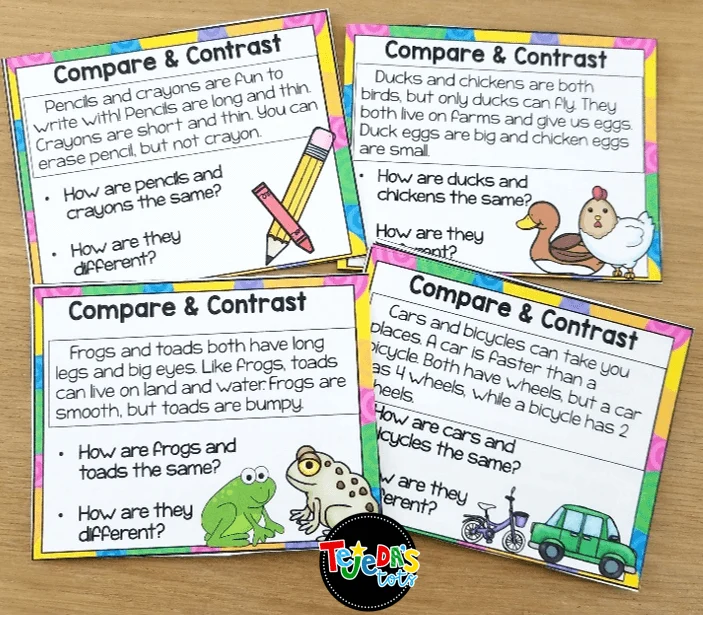
A compare-and-contrast essay helps students explore the similarities and differences between two subjects, ideas, texts, events, or experiences. It is a common university assignment because it develops critical thinking, analytical reasoning, and the ability to organize evidence into a clear argument. However, simply listing similarities and differences is not enough. A strong essay explains why those comparisons matter and what readers can learn from them.
If you want to understand how to write a compare and contrast essay, start by choosing two subjects that have meaningful similarities and differences. Then identify clear comparison points, develop a focused thesis statement, organize your paragraphs logically, and support your analysis with relevant evidence.
This guide explains each stage of the writing process, from selecting a topic to proofreading your final draft. It also includes examples, essay structures, common mistakes, and a practical checklist to help you write a more effective academic essay.
What Is a Compare-and-Contrast Essay?
A compare-and-contrast essay is an academic paper that examines two or more subjects to explain how they are alike and how they differ. The purpose is not simply to describe each subject separately. Instead, the essay uses comparison to develop a central point, answer a question, or help readers understand a topic more clearly.
For example, a student might compare online learning with traditional classroom learning. The essay could examine flexibility, student interaction, access to resources, and learning environments. Rather than declaring one approach better without evidence, the writer would explain the strengths and limitations of each based on specific criteria.
Compare-and-contrast essays may focus on:
- Two literary works or characters.
- Different historical events or political systems.
- Competing scientific theories.
- Online and face-to-face education.
- Two technologies or business strategies.
- Different approaches to solving the same problem.
The best comparisons involve subjects that share enough in common to make meaningful analysis possible while offering important differences worth exploring.
How to Write a Compare and Contrast Essay Step by Step
Step 1: Understand the Assignment
Before selecting your subjects, read the assignment instructions carefully. Identify which subjects you must compare, how many words you need to write, and whether your instructor expects a balanced comparison or an argument supporting one approach over another.
Look for instruction words such as compare, contrast, analyze, evaluate, and discuss. These words indicate what your essay needs to accomplish.
For example, an assignment asking you to compare two leadership styles may require you to explain their similarities and differences. An assignment asking you to evaluate which style is more effective also requires you to establish criteria and support a judgment.
Understanding the task at the beginning prevents you from writing an informative essay that does not answer the actual question.
Step 2: Choose Two Suitable Subjects
Select subjects that have a clear relationship and can be compared using meaningful criteria. If the subjects are too different, you may struggle to develop a focused argument. If they are almost identical, you may have little substantial analysis to present.
Consider the following questions:
- Do the subjects share a relevant feature or purpose?
- Are there meaningful similarities and differences?
- Can I find reliable information or evidence about both?
- Is the comparison appropriate for the assignment?
- Can I explain why the comparison matters?
For example, comparing two learning methods is usually more productive when you examine the same educational goal, such as student engagement or access to instruction. Comparing unrelated subjects without a clear reason can make an essay feel disorganized.
Choose a comparison that allows you to investigate a specific question rather than merely describe two topics.
Step 3: Identify the Main Comparison Points
Once you have selected your subjects, decide which features you will examine. These features are your comparison points, and they provide the structure for your essay.
For an essay comparing online learning with traditional classroom learning, possible points include:
- Flexibility and scheduling.
- Interaction between students and instructors.
- Access to learning materials.
- Opportunities for independent study.
- Technology requirements.
- Assessment and feedback.
Use the same criteria for both subjects. This makes the comparison fairer and helps readers understand the relationship between them.
Avoid including every possible difference. Select the points that best answer the assignment question and provide enough depth for analysis.
Step 4: Research Both Subjects
A strong compare-and-contrast essay relies on relevant evidence rather than unsupported assumptions. Depending on your topic, you may need academic books, scholarly articles, course readings, credible reports, primary documents, or examples from the texts you are studying.
As you research, record information about both subjects under the same comparison points. This makes it easier to identify patterns and contradictions.
A comparison table can help organize your notes:
| Comparison point | Online learning | Traditional classroom learning |
|---|---|---|
| Scheduling | Often offers greater flexibility | Usually follows a fixed timetable |
| Interaction | May rely on video calls, forums, and messages | Often allows direct, in-person discussion |
| Learning environment | Requires suitable technology and internet access | Usually requires access to a physical classroom |
| Independent study | May require substantial self-management | May provide more scheduled structure |
These are general examples, not universal conclusions. Actual experiences depend on course design, teaching quality, student needs, and available resources.
Use your research to explain similarities and differences accurately, and cite sources according to the referencing style required by your institution.
Step 5: Develop a Clear Thesis Statement
Your thesis statement communicates the main point of the essay. It should identify the subjects being compared and indicate the most important insight your analysis will establish.
A weak thesis simply announces the topic:
“Online learning and traditional classroom learning have similarities and differences.”
This statement does not explain which similarities and differences matter or what the essay will argue.
A stronger thesis might be:
“Although online and traditional classroom learning can provide access to structured instruction, they differ in scheduling flexibility, forms of interaction, and the level of independent planning students may need.”
This thesis establishes the main comparison points and gives the essay a clear direction.
Your thesis should reflect the evidence you have gathered. Avoid making an absolute judgment before you have considered the strengths, limitations, and context of both subjects.
Step 6: Choose an Essay Structure
Two common structures work well for compare-and-contrast essays: the block method and the point-by-point method. The best choice depends on the complexity of your topic, the number of comparison points, and your assignment requirements.
The block method
Discuss the first subject in one section and the second subject in another. You can then include a paragraph that brings the comparison together, depending on the assignment.
A simplified structure looks like this:
- Introduction and thesis statement.
- Body section discussing Subject A.
- Body section discussing Subject B.
- Direct comparison or synthesis, if needed.
- Conclusion.
This method can work well when each subject requires substantial background explanation. However, readers may need to remember details from an earlier section while reading the later one.
The point-by-point method
Discuss both subjects under each comparison point. For example, one paragraph may compare scheduling, another may compare interaction, and a third may examine access to resources.
A simplified structure looks like this:
- Introduction and thesis statement.
- Paragraph comparing scheduling.
- Paragraph comparing interaction.
- Paragraph comparing resources and access.
- Conclusion.
This approach makes similarities and differences easier to follow because readers can compare both subjects within the same section.
Whichever method you choose, organize your paragraphs around your thesis rather than treating each subject as a separate topic with no clear connection.
Step 7: Write the Introduction
Your introduction should establish the topic, introduce the subjects, explain the purpose of the comparison, and present your thesis statement.
Begin with a relevant opening that provides context. You might introduce a current academic debate, describe a practical problem, or explain why the subjects are commonly compared.
Next, identify both subjects clearly. Avoid spending too much space explaining background information that does not help the comparison.
End the introduction with your thesis statement so readers know which aspects the essay will examine and what central point it will develop.
A focused introduction prepares readers for the analysis without revealing every detail of the body paragraphs.
Step 8: Develop Focused Body Paragraphs
Each body paragraph should examine one main comparison point and connect it to your thesis. A useful paragraph structure includes a topic sentence, evidence about both subjects, analysis of the relationship between them, and a sentence that reinforces the paragraph’s main point.
For example, a paragraph about flexibility might explain how online courses can allow students to access recorded materials at different times. It could then compare this with the scheduled sessions commonly associated with classroom-based courses. The analysis should explain why the distinction matters, while acknowledging that some online courses also have fixed attendance requirements.
Use evidence, examples, and careful reasoning to support your claims. Avoid describing Subject A in one paragraph and Subject B in another without explaining how the information relates.
Transitions such as similarly, in contrast, whereas, both, and however can make the relationship between ideas clearer. Use them naturally rather than inserting transition words into every sentence.
Step 9: Write a Meaningful Conclusion
The conclusion should bring the comparison together and explain what the analysis demonstrates. Restate the thesis in fresh language, summarize the most significant similarities and differences, and emphasize the broader insight gained from comparing the subjects.
Do not simply repeat the body paragraphs one by one. Instead, explain which comparison points matter most and why.
For example, an essay about learning methods might conclude that neither approach is automatically more effective in every situation. Their relative strengths depend on course design, learning objectives, available resources, and student needs.
Avoid introducing major new evidence in the conclusion. The purpose is to synthesize the analysis and provide a clear ending to the argument.
Example Outline for a Compare-and-Contrast Essay
Suppose your assignment asks you to compare online learning and traditional classroom learning.
Title: Online Learning vs. Traditional Classroom Learning
Introduction
- Introduce the growing range of university learning environments.
- Identify the two approaches.
- Present a thesis about their differences in flexibility, interaction, and learning structure.
Body paragraph 1: Scheduling and flexibility
- Explain how each approach organizes learning time.
- Compare the benefits and limitations of each arrangement.
- Connect the comparison to student needs.
Body paragraph 2: Interaction
- Examine how students communicate with instructors and classmates.
- Compare face-to-face interaction with online communication.
- Discuss how course design affects participation.
Body paragraph 3: Access to resources
- Compare digital materials with resources available in classroom settings.
- Consider technology access and physical attendance requirements.
- Explain why these factors influence learning opportunities.
Conclusion
- Summarize the main comparison.
- Explain why context matters when evaluating each approach.
- Reinforce the thesis without introducing unrelated claims.
This outline keeps the essay focused and ensures that each body paragraph contributes to the central argument.
Common Mistakes to Avoid
Listing Differences Without Analysis
A list of similarities and differences does not automatically create a strong essay. Explain why each point matters and how it contributes to the overall argument.
Using Unfair Comparison Criteria
Do not judge one subject by one standard and the other by a different standard. Apply consistent criteria so readers can follow your reasoning.
Choosing Too Many Comparison Points
Trying to discuss every possible feature can make the essay superficial. Select the most relevant points and analyze them in sufficient detail.
Repeating the Same Information
Avoid restating a comparison without adding evidence or interpretation. Each paragraph should contribute a distinct idea.
Using Unsupported Generalizations
Statements such as “online learning is always easier” or “classroom teaching is better” oversimplify complex issues. Qualify claims and support them with relevant evidence.
Forgetting the Thesis
Every major paragraph should connect to the central argument. If a comparison point does not help answer the assignment question, consider removing it.
Compare-and-Contrast Essay Checklist
Before submitting your essay, check the following:
- I have answered the assignment question directly.
- Both subjects are clearly identified.
- My comparison points are relevant and consistent.
- My thesis states the main insight of the essay.
- I have chosen a logical structure.
- Each body paragraph has one clear focus.
- I have explained the significance of similarities and differences.
- My claims are supported by appropriate evidence.
- I have used transitions to clarify relationships between ideas.
- My conclusion synthesizes the comparison.
- I have checked grammar, spelling, formatting, and citations.
Frequently Asked Questions
What is the best structure for a compare-and-contrast essay?
The point-by-point method is useful when you want to compare both subjects directly under the same criteria. The block method can work well when each subject needs a detailed explanation before the comparison is brought together. Choose the structure that best suits your topic and assignment.
How many paragraphs should a compare-and-contrast essay have?
The required length depends on the assignment. A short essay might contain an introduction, three body paragraphs, and a conclusion. A longer university paper may need additional paragraphs for evidence, context, and more detailed analysis. Follow your instructor’s word count and marking criteria.
Does a compare-and-contrast essay need a thesis statement?
Yes, in most academic assignments. A thesis gives the comparison a purpose and helps readers understand the main point you will establish. It should do more than announce that two subjects are being compared.
Can I include both similarities and differences in one paragraph?
Yes. In the point-by-point method, each paragraph often compares both subjects using one shared criterion. In the block method, similarities and differences may be discussed in separate sections before the overall comparison is synthesized.
How do I make my compare-and-contrast essay more analytical?
Choose meaningful criteria, use evidence for both subjects, explain why the comparison matters, and connect each paragraph to your thesis. Instead of merely stating that two subjects differ, examine the reasons for the difference and its implications.
Conclusion
Learning how to write a compare and contrast essay involves more than identifying what two subjects have in common and where they differ. A strong essay uses a clear thesis, consistent comparison criteria, appropriate evidence, and a logical structure to develop a meaningful argument.
Begin by understanding your assignment, selecting suitable subjects, and organizing your research. Then choose the block or point-by-point method, write focused body paragraphs, and explain why the comparison matters. Finish by checking that your conclusion reinforces the central insight and that every major claim is supported.
With careful planning and critical analysis, you can produce a compare-and-contrast essay that is clear, balanced, and academically persuasive.
Leave a Reply