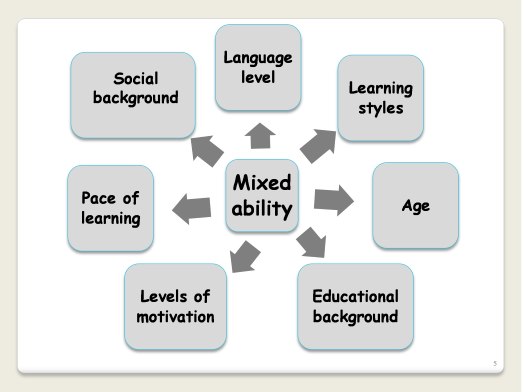
Teaching a class where students have different abilities, learning speeds, interests, and levels of prior knowledge can be challenging. Some learners understand a new concept quickly, while others need additional explanation, guided practice, or alternative ways to engage with the material. Effective teaching must account for these differences without lowering expectations or making any student feel excluded.
The most useful teaching strategies for mixed ability classrooms help teachers maintain shared learning goals while providing different levels of support and challenge. Through differentiated instruction, flexible grouping, scaffolding, formative assessment, and inclusive lesson design, educators can create learning experiences that help more students participate and make progress.
This guide explores practical approaches teachers can use to support diverse learners, manage classroom activities, and build an environment where every student has opportunities to succeed.
What Is a Mixed-Ability Classroom?
A mixed-ability classroom includes students who differ in their current knowledge, skills, confidence, learning pace, language proficiency, and educational needs. These differences may appear in reading comprehension, mathematical reasoning, writing, problem-solving, communication, or independent learning.
Mixed-ability teaching does not mean creating a separate lesson for every student. Instead, it involves identifying what learners need to reach shared objectives and adjusting instruction, resources, activities, or support accordingly.
For example, in a lesson about persuasive writing, all students might work toward writing a clear argument supported by evidence. Some may use a sentence frame and a paragraph organizer, while others independently evaluate counterarguments or refine the strength of their evidence. Everyone works toward the central objective, but the level of support and complexity varies.
The goal is to make learning appropriately challenging, accessible, and meaningful for the whole class.
1. Use Differentiated Instruction
Differentiated instruction is one of the most practical teaching strategies for mixed ability classrooms. It involves adjusting aspects of teaching to respond to students’ readiness, interests, and learning needs while keeping the intended learning goals clear.
Teachers can differentiate in several ways:
- Content: Provide texts, examples, or resources at different levels of complexity while preserving the essential concepts.
- Process: Offer different routes for practicing a skill, such as guided examples, independent problem-solving, discussion, or hands-on activities.
- Product: Allow students to demonstrate understanding through appropriate formats, such as a written explanation, presentation, diagram, or practical demonstration when the assessment goals permit.
- Support: Provide prompts, worked examples, vocabulary lists, checklists, or additional teacher guidance to students who need them.
Consider a science lesson on ecosystems. All students investigate how organisms depend on one another. Some might label a food web using a word bank, others might construct and explain their own food web, and advanced learners might analyze how removing one species could affect the ecosystem.
Differentiation should be purposeful rather than permanent. Avoid assigning students fixed labels such as “low ability” or “high ability.” A learner who needs help with reading may demonstrate strong scientific reasoning, while a student who excels in one subject may need support in another.
2. Set Clear Learning Objectives and Success Criteria
Students are more likely to work effectively when they understand what they are expected to learn and how successful performance will be recognized.
Begin each lesson with a clear objective that describes the intended learning, not merely the activity. For example, “Students will compare two characters using relevant details from the text” is more informative than “Students will complete a worksheet.”
Then identify success criteria that make the objective achievable. For the character comparison task, these might include identifying a meaningful similarity, explaining a difference, and supporting each point with textual evidence.
You can provide a checklist, model answer, or worked example to clarify expectations. Students who need more guidance can use the criteria to check each step, while independent learners can use them to evaluate the depth and accuracy of their work.
Clear objectives also help teachers decide which adaptations are appropriate. Students may use different resources or complete activities at different levels of complexity, but they should still understand the central purpose of the lesson.
3. Use Flexible Grouping
Flexible grouping allows teachers to organize students in different ways according to the task and learning objective. Rather than placing students in fixed groups based on a broad ability label, teachers can adjust group membership as needs change.
Useful grouping approaches include:
- Mixed-ability groups: Students with different strengths work together on a shared task.
- Similar-need groups: Students receive focused instruction or practice on a specific skill.
- Pairs: Students explain their reasoning, compare answers, or rehearse ideas before sharing with the class.
- Independent work: Students practice at their own pace or demonstrate individual understanding.
For example, after a short mathematics assessment, a teacher might work with a small group that needs support with fractions while other students complete practice problems or extension tasks. Later in the lesson, students could return to mixed groups to solve a problem that requires several strategies.
Give every group a clear purpose and meaningful task. Rotate roles such as facilitator, recorder, materials manager, and presenter so that participation does not depend on one confident student. Monitor group dynamics to ensure that all students contribute and no learner is consistently given a passive or less challenging role.
4. Scaffold Learning Without Creating Dependence
Scaffolding means providing temporary support that helps students complete a task they may not yet manage independently. As their understanding grows, the teacher gradually reduces that support.
Effective scaffolds include:
- Breaking a complex task into manageable stages.
- Demonstrating a process through a worked example.
- Providing sentence starters or vocabulary banks.
- Using graphic organizers to structure ideas.
- Asking guiding questions before giving a direct answer.
- Offering checklists that help students monitor their progress.
Imagine students are learning to write an evidence-based paragraph. The teacher might first model how to make a claim, select supporting evidence, and explain the connection. Students then complete a similar paragraph using a template. Finally, they write a new paragraph independently.
The important principle is gradual release. Too little support can leave students confused, while too much can prevent them from developing independence. Review student performance regularly and remove scaffolds when they are no longer needed.
Scaffolding should also preserve intellectual challenge. Simplifying instructions or providing a planning frame may make a demanding task more accessible without removing the thinking students need to do.
5. Combine Whole-Class Teaching With Small-Group Support
Whole-class instruction remains useful for introducing new concepts, explaining expectations, modeling a skill, and establishing common knowledge. However, students may need different levels of practice after the initial explanation.
A balanced lesson can include a short teacher explanation, guided practice, targeted small-group instruction, independent work, and a final review. This structure gives all students access to the same central idea while allowing the teacher to respond to specific learning needs.
For example, during a reading lesson, the teacher might introduce a comprehension strategy to the whole class. Students then work with texts or questions suited to their current needs. The teacher meets briefly with a group that needs help identifying the main idea, while other students apply the strategy to more complex passages.
Plan meaningful activities for students who are not working directly with the teacher. Independent tasks should be clear, appropriately challenging, and manageable without constant assistance. Classroom routines, visual instructions, and prepared materials can reduce interruptions and help students stay focused.
6. Use Formative Assessment Throughout the Lesson
Formative assessment helps teachers identify what students understand while there is still time to adjust instruction. It is particularly important in mixed-ability classrooms because students may experience different difficulties even when completing the same task.
Useful techniques include:
- Exit tickets at the end of a lesson.
- Short quizzes or retrieval questions.
- Mini whiteboard responses.
- Think-pair-share discussions.
- Observation checklists.
- Student explanations of how they reached an answer.
- Quick confidence ratings followed by evidence of understanding.
For instance, after teaching equivalent fractions, ask every student to solve a short problem and explain the reasoning. Their responses may reveal that some students can identify equivalent fractions but cannot explain why they are equivalent. Others may be ready to apply the concept to more complex problems.
Use this information to decide whether to reteach, provide additional practice, change groups, or introduce an extension activity. Assessment should guide the next teaching decision, not simply generate marks.
7. Offer Meaningful Extension Activities
Students who grasp a concept quickly still need learning opportunities that develop their understanding. Giving them more of the same questions may increase workload without adding much intellectual value.
Instead, design extension tasks that encourage deeper reasoning, creativity, transfer, or independent investigation.
For example, students who quickly master a mathematics procedure could compare two solution methods, explain why a method works, or create a real-world problem that uses the concept. In a literature lesson, students might analyze an author’s choices, compare interpretations, or evaluate how a character’s decisions influence the theme.
Extension work should connect to the learning objective and require more than finishing early. It should not automatically turn advanced learners into unpaid tutors for their classmates. Peer explanation can be valuable when structured, but every student deserves opportunities to develop their own knowledge and skills.
8. Make Learning Accessible and Inclusive
An inclusive classroom anticipates that students will differ in how they access information, participate, and demonstrate understanding. Clear instructions, predictable routines, and multiple ways to engage can reduce unnecessary barriers.
Teachers can improve accessibility by:
- Combining spoken explanations with written or visual instructions.
- Breaking long directions into numbered steps.
- Pre-teaching important vocabulary.
- Providing examples before independent work.
- Using readable layouts and uncluttered materials.
- Allowing appropriate thinking time before asking for responses.
- Offering permitted alternatives for demonstrating learning.
- Checking whether students understand the task before they begin.
For students learning in an additional language, visuals, sentence frames, structured discussion, and explicit vocabulary instruction can help them engage with subject content. Students with disabilities may require specific accommodations based on their learning plans and school policies.
Accessibility does not mean reducing academic expectations for everyone. It means removing unnecessary obstacles so students can work toward the intended outcomes.
9. Build a Supportive Classroom Culture
Students are more willing to attempt challenging work when they feel respected and believe mistakes are part of learning. A supportive classroom culture also makes mixed-ability teaching easier because students can ask questions, share strategies, and learn from different perspectives.
Establish clear expectations for listening, collaboration, disagreement, and feedback. Praise specific learning behaviors, such as revising an explanation, testing a new strategy, or using evidence to support a claim. Avoid comparing students publicly or suggesting that ability is fixed.
Normalize different forms of progress. One student may improve by completing a task independently, while another may demonstrate progress by explaining a complex concept more precisely. Recognizing meaningful growth helps students focus on learning rather than status.
When using peer support, teach students how to ask questions, explain reasoning, and offer constructive feedback. Do not assume that placing students together automatically produces collaboration. Students need roles, routines, and clear expectations.
Common Mistakes to Avoid
Mixed-ability teaching is more effective when adjustments are based on evidence rather than assumptions. Avoid these common mistakes:
Using permanent ability groups. Students’ needs vary by subject and task. Review groupings regularly and change them when evidence suggests a different approach.
Giving every student the same task without considering support. A common objective can be maintained while resources, prompts, or levels of complexity are adjusted.
Making work easier instead of making it accessible. Use scaffolds that help students engage with meaningful thinking rather than removing the central learning challenge.
Giving advanced learners extra work without extra depth. Provide extension activities that promote analysis, creativity, and transfer.
Relying on one teaching method. Combine explanation, modeling, discussion, practice, visual support, and independent application where appropriate.
Ignoring assessment evidence. Use student responses to determine what to reteach, what to practice, and where to offer further challenge.
A Practical Lesson-Planning Checklist
Before teaching a mixed-ability class, ask yourself:
- Is the main learning objective clear?
- Have I identified the essential success criteria?
- What prior knowledge or misconceptions might students bring?
- Which students may need scaffolding, additional practice, or extension?
- Are the instructions and materials accessible?
- Is there a purposeful mix of whole-class, group, and independent learning?
- How will I check understanding during the lesson?
- What will I do if students struggle or finish early?
- Does every student have a meaningful opportunity to participate?
- How will I use the assessment results to plan the next lesson?
You do not need to use every strategy in every lesson. Select the approaches that best fit the objective, the students’ current needs, and the available time and resources.
Conclusion
Effective teaching strategies for mixed ability classrooms help teachers respond to differences without separating students from shared learning goals. Differentiated instruction, flexible grouping, scaffolding, formative assessment, meaningful extension, and inclusive classroom routines can make learning more accessible while preserving appropriate challenge.
The key is to observe how students respond, use assessment evidence to guide decisions, and adjust support as learning develops. Rather than trying to create a perfect individual plan for every learner, begin with clear objectives, make thoughtful adaptations, and refine your approach over time. With consistent planning and a supportive classroom culture, teachers can create better opportunities for students with a wide range of strengths and needs to make progress.
Leave a Reply