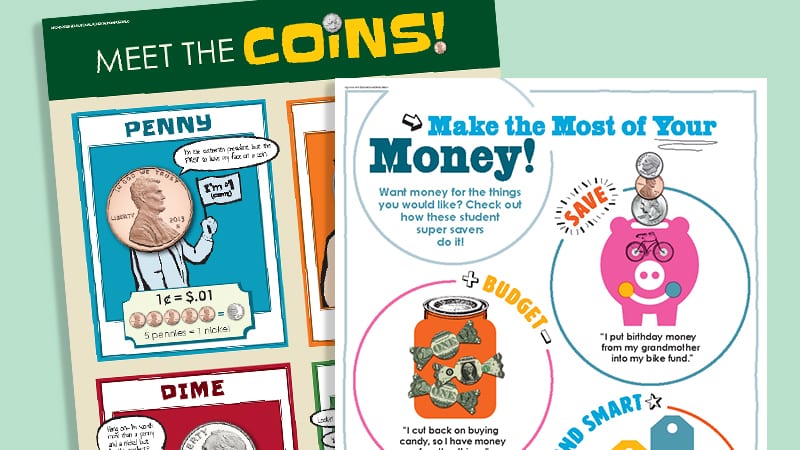
Learning how to manage money is an essential life skill, yet many students graduate from high school without understanding how to create a budget, compare financial products, manage debt, or plan for future expenses. These skills influence everyday decisions, from purchasing a first car to paying for college and saving for long-term goals.
Financial literacy lessons for high school students help young people develop the knowledge and confidence to make informed financial decisions. By introducing practical money management concepts before students become financially independent, teachers can prepare them for real-world responsibilities.
Effective financial education goes beyond explaining financial terms. It gives students opportunities to practice budgeting, evaluate choices, understand financial risks, and recognize how everyday habits influence their future. With realistic examples and interactive classroom activities, educators can make financial literacy engaging, accessible, and relevant to students’ lives.
Why Financial Literacy Matters in High School
High school is an ideal time to introduce financial education because students are beginning to make more independent decisions. Some may have part-time jobs, receive allowances, save for personal purchases, or prepare for college and vocational training.
Without a clear understanding of money management, young people may underestimate expenses, rely on borrowing without understanding the consequences, or struggle to distinguish essential purchases from optional spending.
Financial literacy helps students develop several important skills:
- Making informed spending decisions.
- Creating and maintaining a realistic budget.
- Building healthy saving habits.
- Understanding bank accounts, interest, and fees.
- Recognizing the costs and risks of borrowing.
- Evaluating financial information and avoiding scams.
- Setting short-term and long-term financial goals.
These skills do not guarantee financial success, but they provide a stronger foundation for making thoughtful decisions throughout adulthood.
1. Teach Students How to Create a Realistic Budget
Budgeting is one of the most useful starting points for financial education. It helps students understand where money comes from, where it goes, and how spending choices affect their ability to reach financial goals.
A budget compares available income with planned expenses. Students should learn that income may come from a part-time job, an allowance, gifts, or other legitimate sources, while expenses may include transportation, food, entertainment, school supplies, and savings.
Classroom activity: The monthly budget challenge
Give each student a fictional monthly income and a list of expenses. Ask them to create a budget that covers essential needs, includes some discretionary spending, and leaves room for savings when possible.
For example, a student might have a monthly income of $600 in a classroom simulation. The student must allocate money for transportation, food, phone service, personal expenses, and savings.
Then introduce an unexpected expense, such as a $75 repair or a higher transportation bill. Students must adjust their budgets without spending more than they have.
Discuss which expenses are essential, which can be reduced, and why leaving room for unexpected costs matters.
Learning outcome: Students practice prioritizing expenses, tracking spending, and adjusting financial plans when circumstances change.
Teachers can adapt the currency and expense categories to reflect local prices and students’ circumstances. The figures are illustrative rather than a recommended budget.
2. Explain Saving and the Power of Compound Interest
Saving allows people to prepare for future purchases, emergencies, education, and other important goals. However, students may find it difficult to save when a desired purchase is immediately available.
Lessons should explain the difference between short-term goals, such as purchasing a book, and longer-term goals, such as building an emergency fund or paying for further education.
Students should also understand how interest works. When money earns compound interest, interest is added to the balance, and future interest may be earned on both the original amount and previous interest.
Classroom activity: The savings growth experiment
Ask students to compare two fictional saving plans. In the first plan, money earns no interest. In the second, the same starting balance earns interest that compounds over time.
Have students calculate how the balances change across several years using a spreadsheet or calculator. Explain that actual returns depend on the account, interest rate, fees, inflation, and other conditions.
You can also ask students to set a savings goal and calculate how much they would need to save each week or month to reach it.
Learning outcome: Students understand the relationship between consistent saving, time, and compound interest.
3. Introduce Banking and Digital Payments
Many students use digital payment services or encounter bank accounts through family members, but they may not understand how these financial tools operate.
A financial literacy lesson should introduce checking and savings accounts, debit cards, account statements, electronic transfers, and common banking fees. Students should learn that a debit card generally uses money available in an associated account, while a credit card involves borrowing that must be repaid.
Teachers can explain how to read a sample account statement and identify deposits, withdrawals, balances, and fees.
Classroom activity: Compare fictional bank accounts
Prepare descriptions of three fictional accounts with different features. One might have no monthly maintenance fee, another might offer interest on savings, and a third might charge fees under certain conditions.
Ask students to compare the options based on the needs of a fictional customer. They should identify relevant fees, account requirements, access to funds, and other important conditions.
Include a discussion about digital security. Students should never share passwords, one-time verification codes, or sensitive account information with unverified individuals.
Learning outcome: Students learn to compare financial services and recognize the importance of account security.
4. Help Students Understand Credit and Debt
Credit can help people pay for certain purchases or meet specific financial needs, but borrowing also creates obligations. Students should understand that borrowed money usually must be repaid under agreed terms and may involve interest, fees, and penalties.
Introduce key concepts such as principal, interest rate, repayment period, minimum payment, and credit history. Explain that making only minimum payments on some forms of revolving credit can extend repayment and increase the total amount paid.
Classroom activity: Compare the true cost of borrowing
Present two fictional loan offers for the same purchase. Give students the amount borrowed, interest rate, repayment period, and any applicable fees.
Ask them to compare the monthly payment and total repayment amount. Discuss why a lower monthly payment does not necessarily mean a loan is cheaper overall.
Students can also evaluate the difference between saving for a purchase and borrowing to buy it immediately. The aim is not to label all borrowing as bad but to help learners understand costs, risks, and alternatives.
Learning outcome: Students become more aware of borrowing obligations and learn to evaluate credit offers carefully.
5. Teach Smart Spending and Consumer Decision-Making
Advertising, social media trends, limited-time offers, and peer pressure can influence how young people spend money. Financial education should help students distinguish genuine needs from wants and consider the long-term effects of purchasing decisions.
Students should learn to compare prices, evaluate product quality, understand return policies, and calculate the cost per unit when comparing similar products.
They should also recognize how small recurring expenses can add up over time. A subscription that appears inexpensive each month may become a significant annual cost.
Classroom activity: The purchase comparison project
Ask students to compare three fictional products or services that meet the same need. Provide prices, quality information, warranties, delivery charges, and other relevant details.
Students must recommend an option and justify their decision using both cost and value.
Introduce examples of misleading discounts, influencer promotions, and countdown messages that encourage rushed decisions. Ask students what additional information they would need before making a purchase.
Learning outcome: Students practice evaluating value, recognizing persuasive marketing, and making deliberate spending choices.
6. Introduce Taxes, Paychecks, and Employment Income
Students entering the workforce may be surprised that the amount they receive in a paycheck can differ from their total earnings. A basic understanding of income, deductions, and taxes helps them plan realistically.
Explain the difference between gross pay and net pay. Gross pay is earnings before deductions, while net pay is the amount received after deductions. Depending on the country and employment arrangement, deductions may include income taxes, social insurance contributions, or benefits.
Classroom activity: Read a sample paycheck
Create a fictional paycheck showing hourly pay, hours worked, gross earnings, deductions, and net pay.
Ask students to calculate total earnings and identify how deductions affect the amount available for spending and saving. Then give them a fictional monthly budget and ask whether the take-home pay is sufficient to cover planned expenses.
Teachers should explain that tax rules vary by jurisdiction and employment status. Students should use locally appropriate examples rather than assuming one country’s rules apply everywhere.
Learning outcome: Students understand basic payroll concepts and learn to budget using take-home income instead of gross earnings.
7. Teach Students to Recognize Financial Scams
Financial scams often target people who are inexperienced, distracted, or attracted by promises of easy money. Students may encounter suspicious messages, fake online shops, impersonation attempts, fraudulent job offers, or investment promotions on social media.
Financial literacy should therefore include practical lessons on recognizing warning signs.
Teach students to question offers that promise guaranteed high returns, demand urgent payments, request sensitive information, or require an upfront fee for a supposedly certain reward.
Classroom activity: Scam or legitimate offer?
Prepare fictional messages that represent a mixture of legitimate communication and suspicious offers. Ask students to identify warning signs and explain what they would do next.
Encourage students to verify organizations using independently obtained contact details rather than relying on links or phone numbers contained in suspicious messages. They should also know how to report concerns to a trusted adult, school staff member, financial institution, or appropriate local authority.
Explain that professional-looking messages can still be fraudulent and that a single warning sign does not always establish whether a message is genuine. Verification is essential.
Learning outcome: Students learn to recognize common fraud tactics, protect personal information, and seek help when necessary.
8. Connect Financial Goals With College and Career Planning
Education, training, transportation, housing, and employment decisions can have significant financial consequences. High school students benefit from learning how to estimate future costs and compare different pathways.
Discuss tuition, books, housing, transportation, scholarships, grants, and possible borrowing. Explain that students should compare the total cost of an education option with its benefits, available funding, and their individual circumstances.
Classroom activity: Plan for a future goal
Ask students to choose a fictional goal, such as purchasing a laptop, completing a training course, or saving for further education.
They should estimate the cost, identify potential funding sources, establish a timeline, and calculate how much they would need to save regularly. They can then compare two or more possible plans and explain their advantages and disadvantages.
The activity should emphasize that financial circumstances differ. Students should not be required to disclose their family’s income, savings, debt, or personal financial difficulties.
Learning outcome: Students learn to connect financial decisions with longer-term education, career, and personal goals.
How Teachers Can Assess Financial Literacy
Financial education is most effective when students apply concepts to realistic decisions rather than memorize definitions alone.
Teachers can use short projects, quizzes, budgeting exercises, presentations, and written reflections to assess progress. A simple rubric can focus on four areas:
| Assessment area | What students should demonstrate |
|---|---|
| Financial knowledge | Understands basic money management concepts |
| Calculation skills | Correctly calculates budgets, savings, and borrowing costs |
| Decision-making | Compares options and explains trade-offs |
| Risk awareness | Identifies fees, scams, and potential financial consequences |
For example, students might submit a monthly budget with a written explanation of their priorities. Another assessment could ask them to compare two financial products and justify their choice using evidence.
Use fictional scenarios whenever possible to protect students’ privacy and ensure that everyone can participate regardless of family income or financial experience.
Tips for Making Financial Literacy Lessons More Effective
Teachers can improve student engagement by connecting lessons to decisions young people may soon face.
- Use realistic examples: Include part-time work, mobile phone plans, school expenses, and everyday purchases.
- Encourage active participation: Let students compare options, solve problems, and defend their decisions.
- Teach trade-offs: Show that financial choices often involve balancing immediate needs against future goals.
- Avoid judgment: Do not suggest that financial hardship always results from poor personal decisions. Income, family circumstances, access to services, and unexpected events all matter.
- Use technology carefully: Spreadsheets and budgeting simulations can support learning without requiring students to share private financial data.
- Revisit concepts regularly: Short activities across the school year can reinforce skills more effectively than a single isolated lesson.
Financial literacy should be practical, inclusive, and adaptable to the economic realities students may face.
Frequently Asked Questions
What should high school students learn about money?
Students should learn how to budget, save, compare financial products, understand interest and debt, read paychecks, recognize scams, and plan for education and career expenses.
How can teachers make financial literacy engaging?
Interactive budgeting challenges, fictional banking comparisons, paycheck exercises, consumer decision-making projects, and scam-identification activities help students apply financial concepts to realistic situations.
Why should financial education begin in high school?
High school students are approaching greater financial independence. Learning basic money management before making major spending, borrowing, and education decisions can help them understand their options and responsibilities.
Can financial literacy be taught without a dedicated course?
Yes. Teachers can integrate financial concepts into mathematics, economics, social studies, business education, and career planning. Short, practical activities can reinforce financial skills across several subjects.
Conclusion
Financial education prepares students for decisions that will influence their daily lives long after graduation. From budgeting and saving to understanding credit, taxes, and financial scams, these skills help young people evaluate choices and plan for the future.
By incorporating financial literacy lessons for high school students into classroom instruction, educators can make money management more accessible and practical. The most effective lessons allow students to experiment with realistic scenarios, explain their reasoning, and learn from mistakes in a safe environment.
When students understand how financial choices work, they are better equipped to ask informed questions, recognize potential risks, and make decisions that support their personal goals. Building these habits during high school creates a useful foundation for lifelong financial learning.