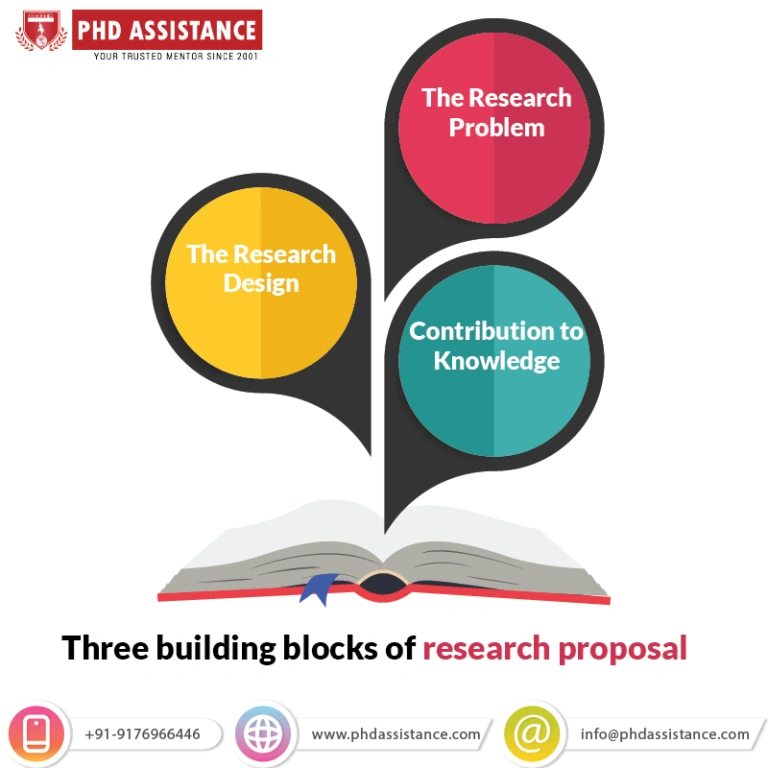
Writing a university research proposal is an important step toward completing a research project, undergraduate thesis, master’s dissertation, or PhD study. A strong proposal explains what you want to investigate, why the topic matters, what existing research says, and how you plan to conduct the study.
For many students, the challenge is not simply choosing a topic. It is turning that topic into a clear research problem and presenting a realistic plan that demonstrates academic value, methodological understanding, and feasibility.
If you are learning how to write a university research proposal, this guide will walk you through each major section. You will learn how to develop a research question, organize a literature review, select appropriate methods, prepare a timeline, and avoid common mistakes that can weaken your submission.
What Is a University Research Proposal?
A university research proposal is a formal document describing a study you intend to conduct. It presents the research problem, explains the project’s importance, reviews relevant academic literature, and outlines the methods you plan to use.
The proposal is a plan for future research, not a report of completed findings. Its purpose is to demonstrate that your project is worthwhile, clearly defined, and achievable with the time and resources available.
Students may need to prepare research proposals for:
- Undergraduate research projects and honors theses
- Master’s dissertations and research degrees
- PhD applications and doctoral projects
- Independent studies or capstone assignments
- University research grants and funding applications
The required structure varies by department, discipline, degree level, and funding organization. Always follow your university’s instructions before using a general template.
Why Is a Research Proposal Important?
A well-prepared proposal helps you organize your thinking before beginning the main research.
It establishes a clear direction. A focused research question gives the project a defined purpose and prevents you from collecting unnecessary information.
It demonstrates academic value. The proposal explains why the problem deserves attention and how the study may contribute to existing knowledge, practice, or policy.
It justifies your methodology. Readers need to understand how your proposed methods will produce evidence relevant to your research question.
It demonstrates feasibility. A realistic plan shows that you have considered time, access to data, equipment, funding, skills, and other practical requirements.
It supports supervisor or committee evaluation. Reviewers can assess whether the project is sufficiently focused, methodologically appropriate, ethically responsible, and achievable.
How to Write a University Research Proposal Step by Step
Step 1: Choose a Focused Research Topic
Begin with a subject that interests you and fits your course or academic field. Your topic should be relevant enough to justify investigation but narrow enough to study within your available resources.
For example, “technology in education” is too broad for most university projects. You could narrow it to “the use of recorded lectures by first-year university students” and then investigate a particular aspect of that subject.
When choosing a topic, consider:
- Your academic interests and existing knowledge
- The relevance of the topic to your discipline
- The availability of credible academic sources
- Access to participants, records, or research materials
- The time and resources required to complete the project
Conduct some preliminary reading before committing to the topic. This helps you discover what researchers already know and which questions remain worth exploring.
Step 2: Identify the Research Problem
A topic tells readers what your project concerns. A research problem explains what issue, uncertainty, or gap your study will address.
Suppose you are interested in recorded lectures. Your preliminary reading may show that students use them in different ways, but you want to understand how first-year students incorporate recordings into their examination preparation.
A possible problem statement could be:
Although recorded lectures provide students with flexible access to course material, their role in students’ examination preparation may vary according to study habits and learning preferences. This project will investigate how first-year university students use recorded lectures when preparing for examinations.
This is an illustrative example, not a claim about an established research gap. In your own proposal, support the problem statement with evidence from the literature.
A convincing problem statement explains what the issue is, why it matters, what is not yet adequately understood, and why further investigation is justified.
Step 3: Develop Your Research Question, Aim, and Objectives
These three elements are related, but they serve different purposes.
Research question: The central question your project seeks to answer.
Research aim: The overall purpose of the study.
Research objectives: The specific tasks that will help you achieve the aim.
For the illustrative recorded-lecture project, they might look like this:
- Research question: How do first-year university students use recorded lectures when preparing for examinations?
- Research aim: To explore the role of recorded lectures in students’ examination preparation.
- Objective 1: Examine how students incorporate recordings into their study routines.
- Objective 2: Identify the reasons students give for using or not using recordings.
- Objective 3: Explore the challenges students experience when using recorded lectures.
Your objectives should be specific enough to guide the research. Avoid listing activities that do not directly contribute to answering the central question.
Step 4: Write the Introduction and Background
The introduction establishes the context for the proposed study. It should help readers understand the topic before you explain the detailed research design.
A clear introduction usually includes:
- A brief introduction to the subject
- Relevant background information
- The specific problem you intend to investigate
- The research question or purpose
- A concise explanation of why the study matters
Move from the broader subject to the particular problem. Avoid opening with sweeping claims that are difficult to substantiate. Use reliable evidence when presenting statistics, describing trends, or making claims about existing research.
By the end of the introduction, readers should understand what you want to study and why the question deserves further investigation.
Step 5: Prepare a Focused Literature Review
The literature review explains what relevant research has already established and how your proposed project relates to it.
It should not simply list summaries of individual publications. Instead, organize the discussion around themes, findings, debates, methods, or limitations.
To develop this section:
- Search for relevant books, peer-reviewed articles, and credible research reports.
- Identify major concepts and findings in the field.
- Compare the methods and conclusions of different studies.
- Highlight areas of disagreement or uncertainty.
- Explain how the existing literature supports your research problem.
For example, a literature review about recorded lectures might examine students’ use of recorded materials, revision strategies, accessibility, and the limitations of existing research.
A useful review leads logically to your research question. It shows why your project is a reasonable next step rather than an unrelated topic.
Avoid claiming that no research exists unless your search provides a strong basis for that statement. A more defensible gap may concern a particular population, setting, method, or unanswered aspect of an established topic.
Step 6: Explain the Research Methodology
The methodology is one of the most important parts of a research proposal. It explains how you intend to answer the research question and why your chosen approach is appropriate.
Your methods must match the question rather than being selected simply because they are familiar.
Qualitative research
Qualitative research is useful for understanding experiences, perspectives, meanings, and processes. Methods may include interviews, focus groups, observations, or qualitative analysis of documents.
For the recorded-lecture example, interviews could help explore how students use recordings and why they consider them useful or difficult.
Quantitative research
Quantitative research uses numerical data to examine patterns, differences, or relationships. Methods may include structured surveys, experiments, tests, or statistical analysis of existing data.
For example, a project might examine whether the frequency of recorded-lecture use is associated with students’ self-reported revision time.
Mixed-methods research
Mixed-methods research combines quantitative and qualitative approaches when numerical patterns and explanations of those patterns are both important.
For instance, a researcher could use a survey to identify study habits and follow-up interviews to explore students’ reasons for those habits.
What to include in the methodology
Depending on your discipline and project, explain:
- The overall research design
- The population, sample, or materials you will study
- How participants or sources will be selected
- The data collection methods and procedures
- How you will analyze the data
- Why the methods fit your research question
- Any anticipated limitations or practical challenges
Be specific enough for a reviewer to understand what you intend to do. A statement such as “data will be analyzed” is too vague without explaining the general analysis process.
Step 7: Address Ethical Considerations
If your project involves people, personal information, sensitive records, or potentially harmful procedures, explain how you will manage the relevant ethical issues.
Depending on the study, you may need to discuss:
- Informed consent
- Voluntary participation
- Confidentiality and data protection
- Secure data storage
- The right to withdraw, where applicable
- Risks to participants and how they will be minimized
- Required institutional ethics approval
Do not recruit participants or collect research data before receiving any required approval. Follow your institution’s policies and any applicable legal requirements.
Projects based entirely on published literature may have different ethical requirements, but they still need accurate attribution and responsible handling of information.
Step 8: Explain the Significance and Expected Contribution
This section explains why the proposed study is worth conducting.
Consider whether your research could contribute to academic understanding, improve a professional practice, inform a policy decision, or identify a question for future research.
Distinguish between the potential contribution and a guaranteed result. A proposal should explain what the study may clarify or produce, without claiming findings before the research has been completed.
For example, a project on recorded lectures might provide a clearer understanding of how students incorporate recorded material into their revision routines. The practical value would depend on the evidence collected and the limitations of the study.
A credible proposal acknowledges what the project can reasonably achieve.
Step 9: Create a Realistic Research Timeline
A timeline demonstrates that you have considered the work involved and can organize the project into manageable stages.
The schedule should reflect the scale of the study, your academic calendar, access requirements, and any approval process.
Here is an illustrative timeline for a small university project:
| Research stage | Example duration |
|---|---|
| Topic refinement and preliminary reading | Weeks 1–2 |
| Literature review and proposal revision | Weeks 3–4 |
| Ethics review and access arrangements, if required | Weeks 5–6 or according to institutional timelines |
| Data collection or source selection | Weeks 7–9 |
| Data analysis | Weeks 10–11 |
| Writing, revision, and proofreading | Weeks 12–13 |
This schedule is only an example. A dissertation or doctoral project may require months or years, and ethics approval or recruitment may take longer than expected. Build in time for delays and supervisor feedback.
Step 10: Identify Resources and Budget Requirements
Not every university proposal needs a detailed budget. However, you should identify the resources necessary to complete the project and include a budget when your department or funding body requires one.
Potential requirements include:
- Access to library databases or specialist collections
- Software for qualitative or statistical analysis
- Recording equipment or laboratory materials
- Travel and fieldwork expenses
- Participant-related costs, where permitted
- Printing, transcription, or other research expenses
Explain how you will obtain essential resources. If a key resource is unavailable, consider whether the research design can be adjusted without compromising the project’s purpose.
A realistic resource plan strengthens the proposal by showing that you have considered practical constraints.
Step 11: Prepare the Reference List
Include a complete reference list for the sources cited in your proposal. Use the citation style required by your department, such as APA, MLA, Chicago, or another discipline-specific system.
Check that:
- Every in-text citation has a corresponding reference entry.
- Author names, titles, publication dates, and publication details are accurate.
- DOI or URL information is included when required.
- Formatting is consistent throughout the document.
- Sources are credible and relevant to the research problem.
Use citation software if it helps you stay organized, but verify the generated references manually. Incorrect citations can make a carefully prepared proposal appear unreliable.
Step 12: Revise the Proposal Before Submission
Once the sections are drafted, review the proposal as a complete argument. The research problem should lead to the research question, the literature review should justify that question, and the methodology should explain how you will answer it.
Ask yourself:
- Is the research problem clearly defined?
- Do the aims and objectives match the research question?
- Does the literature review support the need for the project?
- Is the methodology appropriate and sufficiently detailed?
- Have I addressed ethical and practical limitations?
- Is the timeline achievable?
- Does the proposal follow the required format and word count?
Proofread the document for grammar, clarity, consistency, and citation errors. If possible, ask a supervisor, tutor, or writing adviser to review the draft before submission.
Recommended Structure of a University Research Proposal
Although requirements differ between departments, many proposals use a structure similar to the following:
- Title page
- Abstract or executive summary, if required
- Introduction and background
- Problem statement and research questions
- Research aim and objectives
- Literature review
- Research methodology
- Ethical considerations
- Significance and expected contribution
- Timeline and resources or budget, if required
- Reference list
- Appendices, if needed
Not every project needs all these sections, and the order may vary. Some disciplines require a theoretical framework, hypotheses, or a separate conceptual framework. Your department’s template takes priority over this general structure.
Common Research Proposal Mistakes to Avoid
Choosing a topic that is too broad
A project that attempts to cover a whole field is difficult to complete thoroughly. Narrow the topic by population, setting, concept, period, or research objective.
Describing a topic without identifying a problem
A proposal needs a reason for conducting the study. Explain what you want to understand or investigate and support that rationale with relevant literature.
Writing a weak literature review
A list of article summaries does not demonstrate how your project fits into existing research. Compare findings, identify limitations, and explain how the literature leads to your proposed question.
Selecting methods that do not fit the question
A method may be popular or easy to use but still be unsuitable for your research purpose. Explain how your design and analysis will address the question.
Making unrealistic promises
Avoid claiming that a small study will solve a major social or academic problem. Define the likely contribution honestly and acknowledge the limits of your design.
Ignoring feasibility and ethics
Insufficient time, inaccessible participants, missing resources, or unaddressed ethical requirements can prevent a project from proceeding. Identify these issues early and plan realistic responses.
Treating the proposal as a completed research paper
A proposal describes planned research. Use future-oriented language when appropriate, and do not invent findings or present expected results as if they have already been established.
University Research Proposal Checklist
Use this checklist before submitting your proposal:
- The title clearly describes the proposed study.
- The research problem is specific and justified.
- The research question is clear and answerable.
- The aim and objectives align with the question.
- The literature review discusses relevant findings and limitations.
- The methodology explains how the research will be conducted and analyzed.
- Ethical considerations are addressed where relevant.
- The expected contribution is realistic.
- The timeline and resource requirements are feasible.
- Citations and references are accurate and consistent.
- The proposal follows the university’s instructions and word limit.
- The final document has been proofread.
Frequently Asked Questions
How long should a university research proposal be?
There is no universal word count. A short undergraduate project proposal may require only a few pages, while a master’s, PhD, or funding proposal may be substantially longer. Follow the requirements issued by your department, supervisor, or funding organization.
What is the most important part of a research proposal?
The research problem and question are central because they determine what the study is trying to investigate. However, a strong proposal also needs a convincing rationale, relevant literature, an appropriate methodology, and a realistic plan for completing the work.
Can I write a research proposal without conducting research first?
You normally write the proposal before carrying out the main study, but you should conduct preliminary research first. Reviewing existing literature helps you define the problem, understand what is already known, and justify the proposed methods.
What is the difference between a research proposal and a research paper?
A research proposal describes what you plan to investigate, why it matters, and how you intend to conduct the study. A completed research paper reports and discusses the work that has actually been carried out, including its findings and conclusions where applicable.
Does every research proposal need a hypothesis?
No. A hypothesis is common in many quantitative studies that test a predicted relationship or difference. Exploratory, qualitative, and some descriptive projects may use research questions and objectives without a formal hypothesis. Follow the conventions of your discipline.
How can I make my research proposal more convincing?
Present a focused problem, show how relevant literature supports the need for the study, justify methods that fit the question, and demonstrate that the work can be completed with available time and resources. Clear writing and realistic expectations make the proposal easier to evaluate.
Conclusion
Learning how to write a university research proposal involves more than filling in a template. You need to explain a meaningful research problem, develop a focused question, connect the project to existing scholarship, and present a practical method for investigating it.
Start with preliminary reading and refine your topic before drafting the proposal. Make sure your objectives, methodology, timeline, and resources work together to support the same research purpose. Address ethical considerations where relevant, verify your references, and revise the complete document against your university’s requirements.
A strong proposal makes a clear case that the research is worth doing and that you have a credible plan for carrying it out. With careful preparation, you can submit a more focused, realistic, and academically persuasive proposal.
Leave a Reply